Honoring Bentley: The Wise, Old Soul Who Brought Families Peace

Danielle Raub • May 23, 2026

There are some souls who walk into a room and instantly bring peace...

Bentley was one of them.


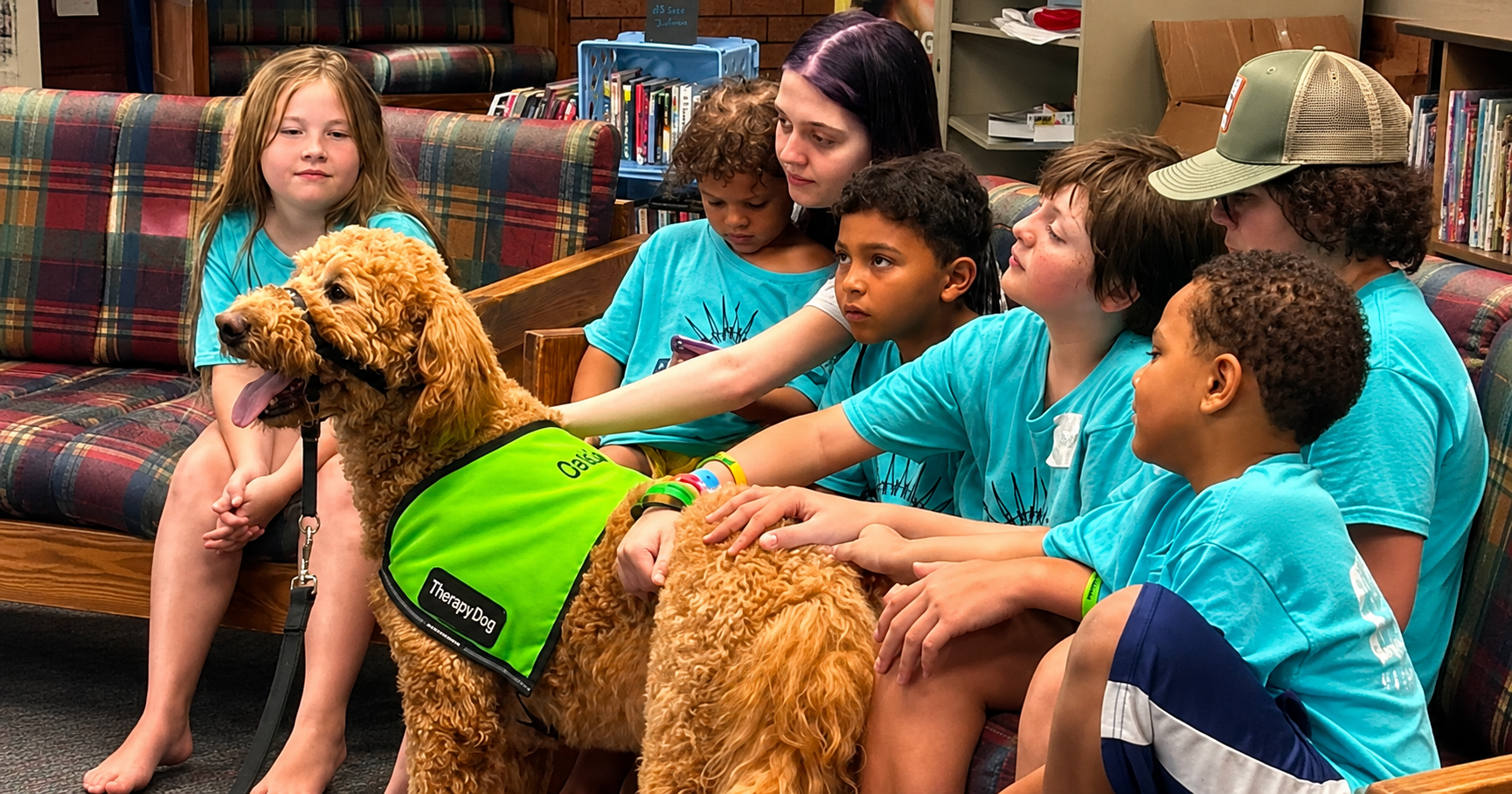
For four years, families visiting Krill Funeral Service were often greeted not only by funeral directors and staff, but by a calm Goldendoodle with soulful eyes, impossibly long lashes, and a quiet way of making people feel safe. Whether he was resting beside someone during a visitation, leaning gently into a grieving child for comfort, or simply sitting nearby in silence, Bentley had an extraordinary ability to sense what people needed without a single word being spoken.


On May 20, 2026, following an unexpected cancer diagnosis, our family made the heartbreaking decision to let Bentley go peacefully.

While our hearts are shattered, we remain deeply grateful for the years we were given with him and for the comfort, joy, and peace he brought our family and to countless others throughout our community.


Born to Bring Comfort


Born on January 20, 2020, Bentley joined the Krill family alongside his brother Oakley. In 2022, the two became certified therapy dogs, fulfilling a vision we had long held of providing dedicated grief support to families navigating loss.


From the beginning, Bentley seemed uniquely made for the role.


He carried himself with the kind of calm presence that people naturally leaned toward. There was something deeply grounding about him. Families often requested him specifically, remembering the comfort he had provided during some of the hardest days of their lives.

He loved deeply, comforted naturally, and somehow always seemed to know when someone needed him most.


More Than a Therapy Dog


Most knew him as Bentley the grief therapy dog. At home, however, he answered to many names: Benny, Benny-boo-boo, Bubbas, and Mumps-mumps. (“Bentley Beauregard Burr!” when he was being mischievous.)


When he wasn't working, Bentley embraced life with equal parts wisdom and goofiness. He believed wholeheartedly that the porch was his throne, the yard was his kingdom, and every squirrel was unauthorized. He loved snow, nature, deep ear scratches, belly rubs, and pizza crusts.


He protected his brother Oakley and served as the calm counterpart to Oakley’s spunky, energetic spirit. Bentley preferred a slower, more soulful approach to life.


People frequently described him as wise beyond his years; an old soul wrapped in golden fur.


The Comfort He Gave Others


One of the most beautiful things about therapy dogs is that they ask nothing from people in return. They do not need explanations for grief. They do not rush tears or try to fix pain. They simply stay close.


Bentley did that thousands of times over.


Over the past several days, we have heard story after story from families who remembered the comfort he brought them during some of the hardest moments of their lives. One family shared that during a funeral, they found themselves sitting on the floor beside Bentley and Oakley, loving on the dogs instead of feeling consumed by the grief waiting in the next room. Another remembered Bentley bringing unexpected laughter to a difficult day when he barked at a cardboard Elvis Presley display during a visitation.


Others described him as “a great asset” to their family’s healing, while many simply thanked us for sharing him with the community.


Perhaps one message captured him best:


“Bentley served so very well in his life, in a dignified, kind and compassionate manner…he was loved immensely by his family and community…it was a good life.”


It truly was.


Grief Looks Different When It’s Your Turn


One of the things grief teaches us, again and again, is that no amount of experience makes someone immune to loss.


Here at Krill, we spend so much time talking about grief support, healthy coping, emotional connection, and the importance of allowing people space to mourn honestly. We encourage families to lean on routines, memories, community, and small sources of comfort in the difficult days after a loss.


Now, we find ourselves trying to practice those same things.


We are leaning on each other. On stories. On laughter between tears. On the quiet rituals that suddenly feel sacred: seeing him greet us alongside his brother at the door, looking at photos we’ve seen a hundred times, catching ourselves expecting him to be in his favorite spot on the porch.


And, of course, we’re ensuring we’re there for Oakley.


Oakley didn’t just lose his partner in therapy work. He lost his brother who had been beside him since the very beginning. The two of them moved through life together: training together, working together, playing together, growing up together. Their bond was constant and instinctive.


Now, in many ways, we are grieving together, finding comfort in each other as we learn how to move through a world without Bentley.


There’s something bittersweet about being comforted by the very kind of grief support Bentley helped us believe in so strongly.


Even now, he is still teaching us.


Bentley’s Legacy


Bentley’s legacy lives on in every family he comforted, every child he sat beside, and every moment he helped make feel a little less heavy.


We miss him more than words can properly express. But we also know how lucky we were to love him and how lucky we were to share him with all of you.


Thank you for loving our Benny alongside us.


He will always remain part of the heart of Krill Funeral Service.

By Danielle Raub May 1, 2026
We often think of grief as something visible. Something tangible.
By Danielle Raub April 22, 2026
When we think about the impact we leave behind, we often think about the life we lived, the choices we made, and the values we carried. For those who made an effort to live more gently on the earth, that care often came from a deeper place: a love for the world around them, and a desire to leave it a little better for the generations that follow. It’s only natural to want that same care reflected in the way they’re laid to rest. More and more families are beginning to ask a simple question: Is there a way to say goodbye that feels a little gentler on the earth? The answer is yes but like most meaningful choices, it’s also a little more nuanced than it seems. Embalming; Balancing Tradition and Environmental Impact 1 One of the first decisions families often face is whether or not to embalm. Some choose to avoid embalming in hopes of reducing environmental impact. In cases where a viewing or wake is still desired, however, refrigeration is typically required. While effective and widely used, refrigeration does rely on energy systems that contribute to broader environmental concerns. Embalming itself is often misunderstood. Modern embalming solutions are carefully regulated and highly diluted. Only a small portion of the solution contains formaldehyde, a compound that breaks down relatively quickly and does not persist in soil or groundwater. For generations, these practices have been carried out safely, with a focus on dignity, preservation, and the well-being of both families and funeral professionals. For many, the decision ultimately comes down to what feels most important: the opportunity for a traditional viewing, personal values around environmental impact, or a balance of both. Green Burial: A Return to Simplicity Green burial is often the most natural option available. It focuses on simplicity, minimizing environmental impact, and allowing the body to return to nature as naturally as possible. This typically means: No embalming chemicals Biodegradable caskets or burial shrouds Burial in a natural or conservation-focused setting Without synthetic materials or preservation methods, the body is able to return to the earth more directly. For many families, there’s comfort in that simplicity. It can feel steady and grounding, something that reflects the natural order of life and a quiet respect for the land itself. At the same time, it’s worth understanding that even green burial exists within a broader environmental picture. Factors like soil conditions, groundwater protection, and long-term land use all play a role. In some settings, natural decomposition can raise concerns around environmental impact or site preservation over time. 1 For families, this doesn’t diminish the meaning of the choice, it just highlights the importance of thoughtful planning and clear information. Cremation: Thoughtful Choices Within a Common Practice Cremation remains one of the most common end-of-life choices. While it is often perceived as a more environmentally friendly option, it does carry its own impact. The cremation process requires a significant amount of energy and results in emissions such as carbon dioxide and other gases. That said, there are still ways to approach cremation with care and intention. Families can consider options such as: Biodegradable vessels made from materials like recycled paper, coconut shells, sand, or salt Scattering gardens, which provide a peaceful and environmentally mindful way to return cremated remains to the soil Urns made from natural materials like ceramic or wood, rather than plastics or synthetic components Individually, these choices may seem small. Together, they reflect the same kind of consideration someone carried in life: a quiet awareness of how their presence touches the world around them. Caskets: Choosing Materials That Reflect Your Values Traditional caskets are often made with metals, treated woods, and synthetic finishes that aren’t designed to break down. For families seeking something more aligned with natural processes, there are alternatives that feel simpler and more organic. Some of these include: Solid wood without chemical treatments Woven fiber caskets These options reduce environmental impact while also offering something that feels warmer, less clinical, and more at home within the natural world. Visitation: Creating a More Thoughtful Send-Off End-of-life care isn’t limited to burial or cremation. The visitation and service itself can reflect the same sense of care and intention. Families are increasingly choosing to: Select locally sourced or seasonal flowers to reduce transportation impact and waste Use digital programs or memorial pages instead of printed materials Incorporate natural fabrics or biodegradable materials where possible Offer simple, thoughtfully sourced refreshments with minimal packaging None of these choices take away from the experience. If anything, they often add to it. They allow the service to feel more personal, while still honoring the traditions that help families find connection and closure. Emerging Options: Looking Ahead There are new options beginning to emerge that aim to reduce environmental impact even further. While not yet legal in Ohio, they are worth understanding from an educational standpoint. Alkaline Hydrolysis (sometimes referred to as water-based cremation) uses a combination of water, temperature, and alkalinity to gently break down the body. Compared to traditional cremation, it uses less energy and does not produce the same level of airborne emissions. The process results in remains that can be returned to the family, similar to cremation. This is currently legal for pets in Ohio. Natural Organic Reduction , also known as human composting, allows the body to naturally decompose in a carefully managed environment, transforming it into nutrient-rich soil over time. For families drawn to the idea of returning to the earth in a more direct and regenerative way, this option can feel especially meaningful. While these methods are not currently available in every state, including Ohio, they reflect a broader shift in how we think about end-of-life care. As laws and practices continue to change, they may become more accessible in the future. For now, understanding these options can help families make more informed decisions and feel more confident in the choices that are available to them today. A Greener Goodbye: Thoughtful, Informed Choices There’s no single “right” way to approach end-of-life care, because no two lives look the same. Whether that means choosing a green burial, a more traditional service, cremation with mindful options, or simply using compostable utensils during visitation, even the smallest details can reflect what matters most. Choosing greener options can be one way to carry those values forward, allowing the final arrangements to reflect not only how someone lived, but what they hoped to leave behind—a legacy rooted in care, thoughtfulness, and a desire to leave the world just a little better than we found it. We’re here to help you explore what’s right for you. Contact us at (419) 636-3525. Sources: Golden, J. A. (n.d.). Viewpoint: Green-Earth burial funerals. American Funeral Director.
By Danielle Raub April 2, 2026
There’s a part of every story that feels unfinished.
By Danielle Raub March 6, 2026
The remarkable true story of Henrietta Duterte, one of the first women funeral directors in America.
By Danielle Raub March 1, 2026
Presidents’ Day invites us to reflect on leadership, history, and national legacy. But beyond the long weekend and the history lessons, it also raises a quieter question: How do we choose to be remembered?